Clear Aligners
Clear aligner treatment gradually moves teeth into the desired position using a series of transparent, removable trays.

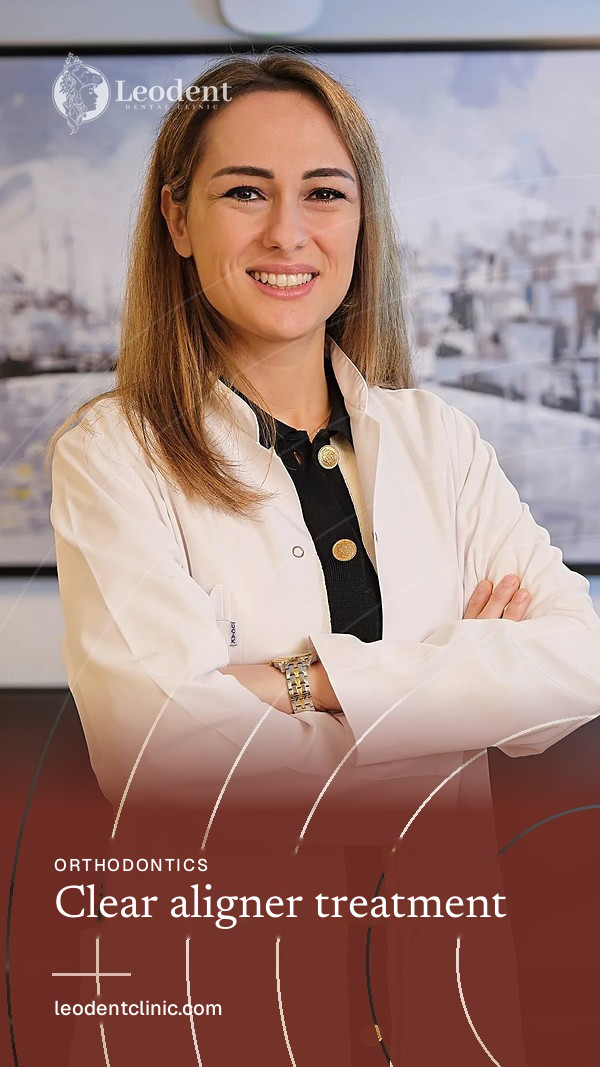
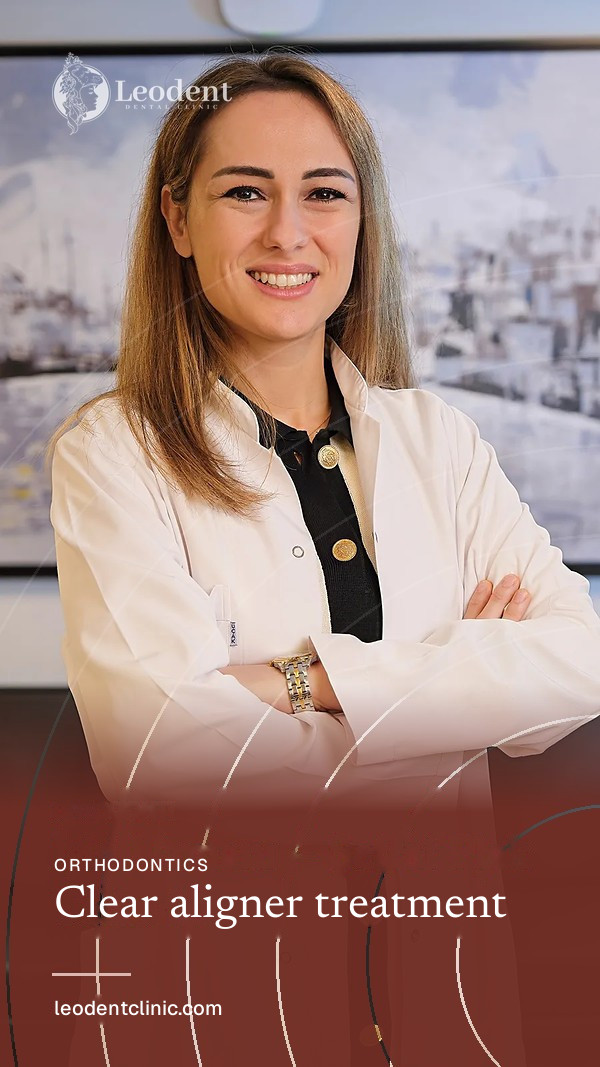
▶ Clear Aligner Treatment | Dr. Dt. Ayşegül Ural Özay | ATV Haber
{ AI · preliminary guidance }
onlineLet's talk about orthodontics

AI responses do not replace a medical diagnosis.
Short videos on this topic
All videos →Short explanations on this topic from the clinic's YouTube channel. 16 videos in total.



Clear aligner treatment is a method that aims to gradually correct crowded teeth and certain bite issues using a series of transparent, removable trays worn in sequence.
What Are Clear Aligners?
A series of transparent, removable trays work progressively to reposition teeth by applying gentle, controlled movement over time. Each tray in the customized sequence is worn for a predetermined period before being replaced with the next one, continuing the stepwise advancement toward the target alignment.
Patients seeking a more discreet orthodontic option and those concerned with the appearance of traditional fixed appliances often consider this approach.
When Are Clear Aligners Used?
This treatment method may be considered in various orthodontic situations:
- Mild to moderate dental crowding
- Gaps or spaces between teeth
- Selected occlusal discrepancies
- Patients who wish to avoid the visibility of conventional braces
The complexity of a given case sometimes requires alternative or supplementary treatment; metal braces may be indicated when clear aligners alone cannot achieve the desired outcome. Treatment recommendations are determined following clinical evaluation and appropriate diagnostic imaging.
Assessment Before Clear Aligner Treatment
Prior to initiating treatment, several clinical parameters are evaluated:
- Dental and skeletal measurements, with radiographs obtained when indicated
- Periodontal and alveolar bone status
- Occlusal relationships and skeletal jaw position
- Patient compliance capacity and realistic expectations regarding the treatment timeline
A customized treatment plan and sequential aligner series are developed according to the intended final tooth positions established during this assessment phase.
How Is Clear Aligner Treatment Applied?
Planning Stage
Precise measurements of dental and skeletal structures are obtained to establish a digital treatment model. From this model, a progressive sequence of aligners is fabricated, with each aligner designed to incrementally advance teeth toward their planned endpoint.
Wearing Stage
Typically, aligners are exchanged at intervals of one to two weeks. Each successive aligner produces incremental tooth movement. Consistent daily wear for the prescribed duration is necessary to achieve optimal treatment outcomes.
Check-up Stage
Periodic clinical appointments are scheduled throughout the course of treatment to monitor progress and confirm that tooth movement aligns with the treatment plan.
How Long Does Treatment Take?
Overall duration depends on the complexity of the case:
- Simple cases: approximately 4–6 months
- Moderate cases: approximately 6–12 months
- More complex cases: approximately 12–18 months
Consistent daily wear has a direct effect on how closely treatment follows this timeline.
After Clear Aligner Treatment
Upon completion of active treatment, retention therapy is ordinarily recommended to preserve the achieved tooth positions. Discontinuation of retention protocols may permit the teeth to gradually return toward their pre-treatment positions over time.
Advantages and Limitations of Clear Aligners
The removable nature of these appliances offers practical advantages for eating and routine oral hygiene maintenance. However, this removability also places responsibility on the patient to maintain consistent wear as prescribed; inadequate compliance may prolong treatment duration or compromise the anticipated result. Furthermore, not all malocclusion presentations are amenable to this method; alternative or combined treatment approaches may be necessary for more complex orthodontic conditions.
Conclusion
Clear aligner therapy represents an option for gradual, subtle tooth repositioning in appropriate clinical situations. A thorough examination determines treatment feasibility and provides clarity regarding the anticipated treatment course.
Frequently Asked Questions
What are clear aligners?
Clear aligners are a series of transparent, removable trays that gradually move the teeth into the desired position. The trays are prepared in a series and changed at set intervals.
Are clear aligners suitable for every case?
No. Suitability depends on the degree of crowding and the type of bite issue. In some complex cases, metal braces may be more appropriate. The decision is made after an examination.
How long does clear aligner treatment take?
Treatment duration varies with the complexity of the case, but generally ranges from a few months to about a year and a half.
How many hours a day should the aligners be worn?
For an effective result, it is recommended to wear the aligners for most of the day, generally removing them only for eating and brushing. Compliance with wear time directly affects the course of treatment.
Do clear aligners cause pain?
A mild pressure sensation on the teeth may occur when switching to a new aligner. This sensation usually decreases within a few days.
What is the difference between clear aligners and braces?
Clear aligners are removable and less noticeable, while metal braces are fixed to the teeth. Which one is suitable depends on the type of case and the patient's preference.
Can adults have clear aligner treatment?
Yes. As long as gum and bone health are suitable, clear aligner treatment can also be considered for adults.
Do the aligners affect speech?
A slight change in speech habits may occur in the first days; this usually resolves on its own in a short time.
Is retention needed after treatment?
Yes. A retainer is generally recommended after treatment to help the teeth maintain their new position.
Treatments often evaluated together
-
Metal Braces
Metal braces treatment is an orthodontic treatment method in which brackets fixed to the teeth and a connecting wire gradually correct crowding and bite irregularities.
-
Smile Design
Smile design is an aesthetic dentistry approach that evaluates tooth colour, shape, alignment and gum harmony as a whole and plans treatment individually for each patient.

Book an Appointment
Your information reaches Leodent Dental Clinic. A response is made within 24 hours.